Choosing the right cable tray is an important decision when planning electrical infrastructure for an industrial project. The cable management system must support the cables properly, provide an organized routing path, allow maintenance access, and suit the environmental conditions of the installation. For many industrial projects, the choice often comes down to two widely used options: perforated cable trays and ladder cable trays.
When comparing a perforated cable tray in Mumbai with a ladder cable tray, there is no single solution that is suitable for every project. The correct choice depends on cable type, cable weight, support span, ventilation requirements, installation environment, available space, and project specifications.
Mumbai’s industrial and infrastructure projects can include manufacturing facilities, warehouses, commercial buildings, utility installations, data centres, and other large electrical systems. Each application may have different cable management requirements. Therefore, understanding the difference between perforated and ladder cable trays can help engineers, contractors, consultants, and procurement teams make a more informed decision.
This guide compares both systems and explains the key factors to consider when making a cable tray selection in Mumbai.
What Is a Perforated Cable Tray?
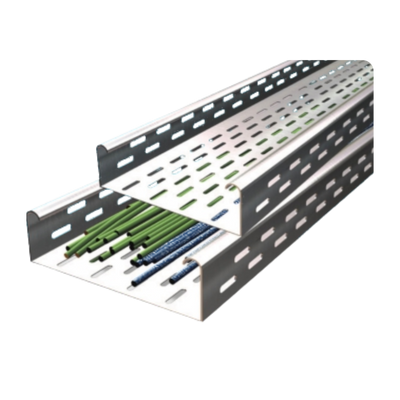
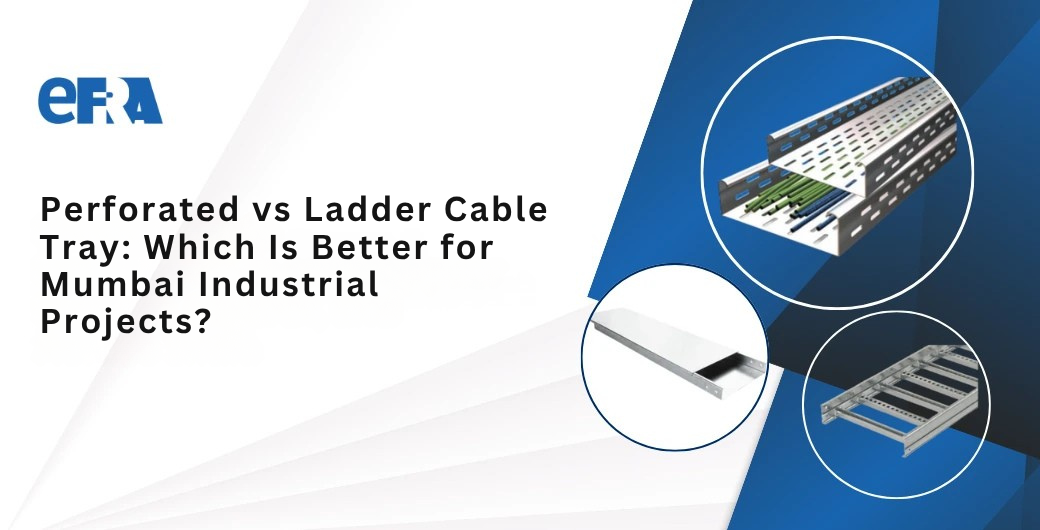
A perforated cable tray is a cable management system with a continuous base containing regularly spaced perforations. These openings can help with cable fixing, ventilation, and installation flexibility. Perforated trays are commonly used for power, control, instrumentation, and other electrical cable routing applications.
For industrial projects, a perforated cable tray manufacturer in Mumbai can provide different widths, heights, thicknesses, materials, and finishes depending on project requirements.
One of the key advantages of a perforated tray is the continuous support provided to cables along the base. This can make it suitable for installations where cables require consistent support throughout the cable route.
Key Features of Perforated Cable Trays
- Continuous base support for cables
- Perforations for cable fixing and ventilation
- Suitable for various industrial cable routing applications
- Available in different sizes and material finishes
- Can be used with suitable covers and accessories
- Useful for organized power and control cable management
What Is a Ladder Cable Tray?
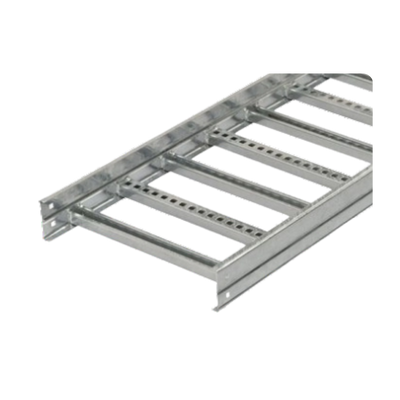
A ladder cable tray consists of two longitudinal side rails connected by regularly spaced rungs. This open structure provides a strong support arrangement while allowing significant airflow around the cables.
A ladder cable tray manufacturer in Mumbai can supply ladder systems in different sizes, materials, finishes, and configurations for industrial and infrastructure applications.
Ladder trays are commonly considered for installations where cable weight, ventilation, longer support spans, and easy cable access are important factors. The open design also makes it easier to inspect cables and attach them using appropriate cable cleats, clamps, or fixing methods according to the project requirements.
Key Features of Ladder Cable Trays
- Open ladder-style construction
- Strong support arrangement for cable installations
- Excellent airflow around cables
- Convenient access for inspection and maintenance
- Suitable for many heavy-duty industrial applications
- Available with different accessories and support arrangements
Perforated vs Ladder Cable Tray: A Quick Comparison
| Factor | Perforated Cable Tray | Ladder Cable Tray |
|---|---|---|
| Base design | Continuous perforated base | Side rails with cross rungs |
| Cable support | Continuous support along the base | Support through the ladder structure |
| Ventilation | Good ventilation through perforations | Excellent open-air ventilation |
| Heavy cable applications | Suitable depending on design and load capacity | Often considered for heavier cable systems |
| Cable fixing | Perforations can assist cable fixing | Clamps and cable cleats may be used |
| Access | Good access for cable installation | Very open and accessible design |
| Typical application | Power, control, instrumentation, and general cable routing | Heavy-duty power and industrial cable routing |
1. Which Tray Is Better for Heavy Cables?
When the cable route contains heavy power cables, the total cable weight and support requirements become important factors. The tray system must be suitable for the expected load between support points.
Ladder cable trays are often considered for heavy-duty cable installations because of their open structural design and ability to support larger cable systems. However, the suitability of any tray depends on its design, material, dimensions, support span, and specified load capacity.
Perforated trays can also be suitable for many industrial cable applications. The decision should not be based only on the product name. Project teams should evaluate the actual cable weight, tray dimensions, support arrangement, and applicable specifications.
For a proper cable tray selection in Mumbai, engineers should calculate the expected cable load before finalizing the product.
2. Which Provides Better Cable Ventilation?
Ventilation is an important consideration for cable installations, especially where multiple power cables are routed together. Heat generated by electrical cables must be considered during system design.
Ladder cable trays have a highly open structure, allowing air to circulate around the cables. This makes them a common consideration for applications where maximum airflow is important.
Perforated cable trays also provide ventilation through the openings in the tray base and side sections. The actual performance depends on the tray design, cable arrangement, cable spacing, and installation conditions.
For projects with high cable concentration, the complete cable arrangement should be reviewed rather than choosing a tray based only on its appearance.
3. Which Tray Is Better for Cable Protection?
Neither perforated nor ladder cable trays automatically provide complete protection against every environmental condition. The required level of protection depends on the installation location and the overall cable management design.
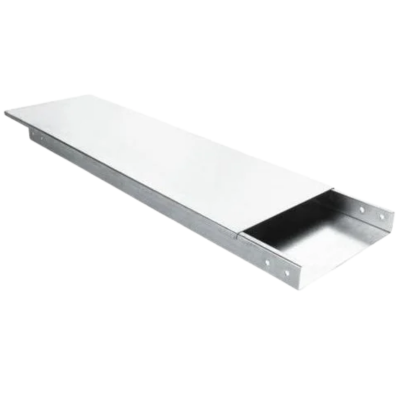
For installations where cables may be exposed to dust, falling objects, or other environmental conditions, a suitable cable tray cover may be considered.
Perforated trays can provide a more continuous base arrangement, while ladder trays provide an open structure. The appropriate solution depends on the project environment, cable type, access requirements, and whether additional protection is required.
In outdoor or industrial environments, material and surface finish are also important. Galvanized or other suitable finishes may be considered depending on the level of corrosion exposure and project specifications.
4. Which Is Better for Mumbai’s Industrial Environment?
Mumbai and the surrounding industrial regions include a variety of installation environments. Cable trays may be installed inside factories, utility areas, warehouses, commercial buildings, rooftops, and outdoor infrastructure locations.
Environmental conditions such as moisture, humidity, industrial pollutants, dust, and chemical exposure should be considered during product selection. A suitable material and finish should be selected based on the actual location where the cable tray will be installed.
For industrial projects, project teams should discuss the expected environment with the cable tray manufacturer serving Mumbai before finalizing the product. This helps ensure that the tray material, thickness, coating, and accessories are suitable for the intended application.
5. Perforated Cable Tray vs Ladder Cable Tray for Maintenance
Maintenance access is another important factor in cable tray selection. Industrial facilities may require regular inspection, cable identification, modification, or replacement.
Both perforated and ladder cable trays can provide accessible cable routing when properly installed. However, the open structure of a ladder tray can make visual inspection and access convenient in many applications.
Perforated trays also allow access to cables and provide fixing points through the perforations. The best option depends on the cable arrangement, tray location, cable density, and the type of maintenance expected.
During the planning stage, project teams should consider whether additional cables may be added in the future. A properly planned tray route can make future modifications easier and reduce unnecessary disruption to the facility.
6. Which Cable Tray Is More Suitable for Different Applications?
Manufacturing Facilities
Manufacturing plants may contain power cables, control cables, instrumentation cables, and automation-related wiring. Perforated trays may be suitable for many general-purpose cable routes, while ladder trays may be considered for heavier power cable sections.
Power Distribution Areas
Power distribution installations may involve large and heavy cables. Load capacity, support spacing, cable arrangement, and ventilation should be carefully evaluated when selecting between a perforated and ladder system.
Warehouses and Commercial Buildings
For warehouses and commercial facilities, the selection may depend on cable quantity, installation space, visual requirements, and the type of electrical systems being routed. Perforated trays can be considered for organized cable routing across many general-purpose applications.
Data Centres and Communication Infrastructure
Data centres and communication facilities require carefully organized cable management. The selected system should support the cable types and routing requirements of the project while providing convenient access for maintenance and future expansion.
Outdoor Industrial Installations
Outdoor installations require additional consideration of moisture, environmental exposure, corrosion, and mechanical conditions. The material and surface finish should be selected according to the project environment.
7. What Standards Should Be Considered?
Technical standards and project specifications should be considered when selecting and installing cable tray systems. IEC 61537:2023 specifies requirements and tests for cable tray systems and cable ladder systems used to support and accommodate cables and, where applicable, other electrical equipment in electrical and communication installations. The standard includes considerations related to testing, corrosion classification, safe working load, and support devices.
In India, the Bureau of Indian Standards (BIS) Know Your Standard portal can be used to search for information related to Indian Standards and product standards. Project-specific requirements, applicable Indian Standards, consultant specifications, and client requirements should always be reviewed before final product selection.
8. How to Make the Right Cable Tray Selection in Mumbai
Before choosing between a perforated and ladder cable tray, consider the following questions:
- What type of cables will be installed?
- What is the total cable weight?
- What is the required tray width and depth?
- How much ventilation is required?
- What is the distance between supports?
- Will the system be installed indoors or outdoors?
- Is the installation exposed to moisture or corrosive conditions?
- Will additional cables be installed in the future?
- Are covers or other accessories required?
- What material and surface finish are required?
Answering these questions can help project teams narrow down the most suitable cable management system for their application.
So, Which Is Better: Perforated or Ladder Cable Tray?
The answer depends on the application.
A perforated cable tray may be a suitable choice when the project requires continuous cable support, organized routing, cable fixing options, and a versatile solution for general industrial applications.
A ladder cable tray may be a better option for applications involving heavier cable systems, greater airflow requirements, longer support spans, and open access for cable inspection and maintenance.
Neither system is universally better than the other. The correct choice should be based on the cable load, installation environment, support arrangement, cable type, space availability, and project specifications.
For this reason, businesses and contractors looking for a perforated cable tray in Mumbai or a ladder cable tray in Mumbai should evaluate the complete application before placing an order.
Frequently Asked Questions
What is the difference between a perforated cable tray and a ladder cable tray?
A perforated cable tray has a continuous base with openings for ventilation and cable fixing, while a ladder cable tray consists mainly of side rails connected by cross rungs. The right option depends on the cable load, installation environment, and project requirements.
Which is better for heavy power cables, perforated or ladder cable tray?
Ladder cable trays are often considered for heavy-duty cable applications because of their open structural design. However, the final choice should be based on cable weight, tray capacity, support span, and project specifications.
Is a perforated cable tray suitable for industrial projects in Mumbai?
Yes. Perforated cable trays can be suitable for many industrial applications in Mumbai, including power, control, instrumentation, and general electrical cable routing. The appropriate material and finish should be selected according to the installation environment.
Is a ladder cable tray suitable for outdoor applications?
A ladder cable tray can be used for outdoor applications when the product material, surface finish, support system, and installation design are suitable for the expected environmental conditions.
How do I select the right cable tray for a Mumbai industrial project?
Consider the cable type, total cable weight, tray dimensions, support span, ventilation requirements, environmental exposure, corrosion conditions, future expansion, and applicable project specifications before selecting a cable tray.
Where can I buy perforated and ladder cable trays in Mumbai?
Businesses and contractors can contact a cable tray manufacturer or supplier serving Mumbai to discuss product specifications, sizes, materials, finishes, accessories, and project-specific requirements.
Get Expert Help with Your Cable Tray Selection
Still unsure whether a perforated or ladder cable tray is right for your Mumbai industrial project? Efra Industries offers cable management solutions for industrial, commercial, infrastructure, and electrical applications.
Share your cable type, required dimensions, project environment, expected load, and quantity with our team. We can help you evaluate suitable cable tray options for your application.
Contact Efra Industries today to discuss your cable tray requirements and request a project quotation.
Request a quotation for your cable tray project or contact our team to discuss perforated and ladder cable tray requirements for your Mumbai project.