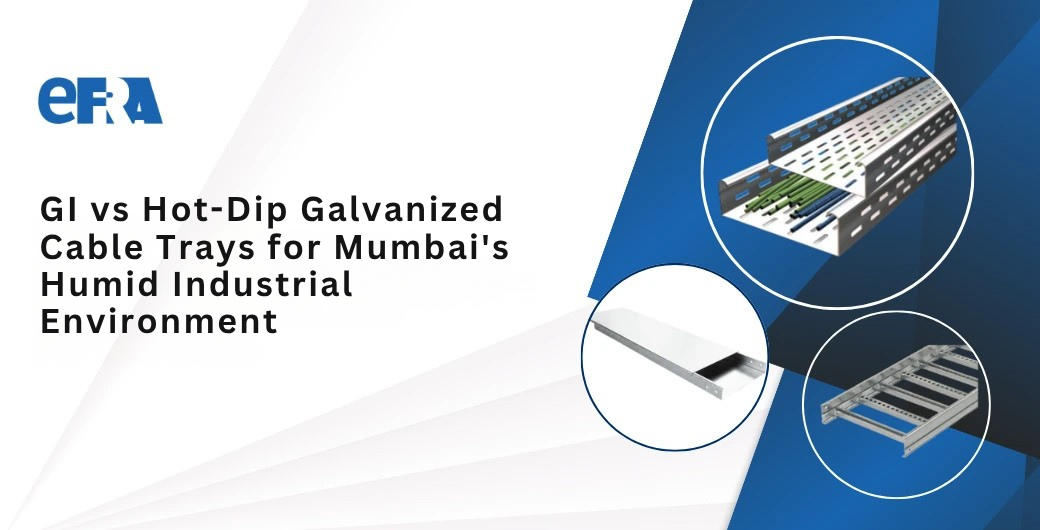
Choosing the right cable tray finish is an important part of planning electrical infrastructure for industrial projects in Mumbai. Cable trays are often installed in manufacturing facilities, warehouses, commercial buildings, utility areas, rooftops, infrastructure projects, and other locations where they may be exposed to humidity, moisture, dust, industrial pollutants, and changing environmental conditions.
For this reason, many project engineers, electrical contractors, consultants, and procurement teams compare GI cable trays in Mumbai with hot-dip galvanized cable trays when selecting a corrosion protection system.
Although the terms GI and galvanized are sometimes used interchangeably, the actual coating process, coating thickness, application method, and expected performance can differ depending on the product. Understanding these differences is important when selecting a corrosion resistant cable tray in Mumbai for a specific industrial environment.
In this guide, we compare GI and hot-dip galvanized cable trays, explain how their protective coatings work, and discuss the key factors to consider for Mumbai’s humid industrial conditions.
Why Corrosion Protection Matters for Cable Trays in Mumbai
Corrosion can affect steel components when they are exposed to moisture and other environmental factors. Cable trays installed in industrial environments may face humidity, condensation, water exposure, chemicals, dust, and atmospheric pollutants. Outdoor installations may also be exposed to rain and prolonged environmental exposure.
When corrosion protection is inadequate, the steel surface can gradually deteriorate. This may affect the appearance, structural condition, and long-term serviceability of the cable management system.
For industrial projects, the choice of material and protective finish should therefore be based on the actual installation environment. A cable tray manufacturer serving Mumbai can help project teams evaluate suitable products based on application, material, dimensions, coating requirements, and environmental exposure.
What Does GI Mean in Cable Trays?
GI generally refers to galvanized iron or, more accurately in many steel product applications, galvanized steel. A zinc coating is applied to the steel to help protect the underlying metal from corrosion.
However, the term GI alone does not fully describe the manufacturing or coating process. A project specification should clarify whether the product is made from pre-galvanized steel, continuously galvanized sheet, batch hot-dip galvanized steel, or another zinc-coating process.
This distinction matters because different galvanizing processes can produce different coating characteristics and levels of protection.
Many GI cable trays in Mumbai are manufactured from galvanized steel sheet or components. They may be suitable for indoor and general industrial applications depending on the product specification and environmental conditions.
What Is a Hot-Dip Galvanized Cable Tray?
A hot-dip galvanized cable tray is a steel cable management product protected using a hot-dip galvanizing process. In this process, prepared steel is immersed in molten zinc, creating a metallurgically bonded zinc coating on the steel surface.
According to the Galvanizers Association, hot-dip galvanizing provides both barrier and sacrificial protection. The zinc coating separates the steel from the surrounding environment, while zinc can also preferentially corrode to provide protection to exposed areas of steel in cases of minor coating damage.
For industrial applications where corrosion resistance is an important consideration, a hot-dip galvanized cable tray in Mumbai may be selected when the project requires a more robust zinc protection system.
The exact coating requirements should always be confirmed according to the relevant specification, manufacturing process, and project requirements.
GI vs Hot-Dip Galvanized Cable Tray: Key Difference
| Factor | GI / Pre-Galvanized Cable Tray | Hot-Dip Galvanized Cable Tray |
|---|---|---|
| Protection method | Zinc coating applied during the steel or sheet manufacturing process | Fabricated steel component immersed in molten zinc |
| Coating characteristics | Depends on the original galvanized material specification | Metallurgically bonded zinc coating |
| Typical application | Indoor and general industrial applications | Applications requiring enhanced corrosion protection |
| Environmental suitability | Depends on coating and exposure conditions | Suitable for demanding environments when correctly specified |
| Coating after fabrication | Some cut or fabricated areas may require consideration | Fabricated components are generally galvanized as part of the process |
| Project selection | Based on material specification and expected exposure | Based on galvanizing specification, coating requirements, and environment |
How Does Hot-Dip Galvanizing Protect Steel?
Hot-dip galvanizing protects steel through multiple mechanisms.
Barrier Protection
The zinc coating creates a physical barrier between the steel and the surrounding environment. This helps reduce direct contact between the steel surface and moisture or other corrosive elements.
Sacrificial Protection
Zinc is more chemically active than steel. If a small area of the zinc coating is damaged, the surrounding zinc can corrode preferentially and provide sacrificial protection to the exposed steel area.
This is one of the important differences between a zinc coating and a simple barrier coating that does not provide sacrificial protection. However, significant damage should still be assessed and repaired using an appropriate method according to the applicable specification.
Protective Zinc Patina
Over time, the zinc surface can react with the atmosphere and develop protective corrosion products. These products can contribute to the long-term protection of the underlying zinc coating.
The Galvanizers Association’s corrosion protection guidance explains the barrier and sacrificial protection mechanisms associated with hot-dip galvanized steel.
Which Is Better for Mumbai’s Humid Environment?
The answer depends on the actual installation environment and the product specification.
For indoor industrial installations with limited exposure to moisture and corrosive conditions, a suitable GI cable tray may provide the required level of protection when correctly specified.
For outdoor installations, coastal exposure, humid locations, process areas, or projects where long-term corrosion protection is a major concern, a hot-dip galvanized system may be considered for its robust zinc coating and protective characteristics.
However, humidity alone should not be used as the only factor when selecting a cable tray finish. The project team should also evaluate:
- Whether the installation is indoors or outdoors
- Exposure to rain and water
- Humidity and condensation
- Presence of chemicals or industrial pollutants
- Coastal or marine atmospheric exposure
- Temperature and ventilation conditions
- Required service life
- Maintenance accessibility
A properly specified corrosion resistant cable tray in Mumbai should match the actual conditions of the installation rather than being selected only by product name.
When Should You Consider GI Cable Trays?
GI cable trays can be considered for a wide range of general industrial and commercial applications. They may be suitable when the installation environment is relatively controlled and the required coating specification matches the expected exposure.
Common applications may include:
- Indoor manufacturing facilities
- Commercial buildings
- Electrical rooms
- Warehouses
- Control and instrumentation areas
- General cable routing installations
The specific product should be selected according to its material grade, coating specification, thickness, dimensions, and project requirements.
When purchasing a GI cable tray in Mumbai, it is important to ask the manufacturer or supplier about the actual galvanizing process and coating specification instead of relying only on the abbreviation GI.
When Should You Consider Hot-Dip Galvanized Cable Trays?
Hot-dip galvanized cable trays may be considered for applications where increased corrosion protection is important. The process provides a zinc coating that is metallurgically bonded to the steel and offers both barrier and sacrificial protection.
Potential applications may include:
- Outdoor industrial installations
- Projects exposed to moisture and rain
- Industrial areas with higher environmental exposure
- Utility and infrastructure installations
- Process industries
- Locations where maintenance access is difficult
However, the final product choice should always be based on the project’s technical specifications and environmental conditions.
What About Pre-Galvanized Cable Trays?
Pre-galvanized cable trays are made using steel or sheet material that has been galvanized before the tray components are fabricated. This process can be efficient for manufacturing cable management products and may be suitable for many indoor and general-purpose applications.
However, the coating characteristics can differ from those of a cable tray that is hot-dip galvanized after fabrication. This is why project teams should understand the manufacturing process and specify the required coating system clearly.
For more demanding environments, the project specification may require a particular coating thickness, galvanizing process, or corrosion classification. The IEC 61537:2023 standard for cable tray and cable ladder systems includes revised corrosion classification provisions along with requirements and tests for cable management systems.
Why Coating Thickness Matters
Coating thickness is an important factor in the expected durability of a zinc-coated steel product. In general, a thicker and properly bonded protective coating can provide a greater amount of zinc available for corrosion protection.
However, coating thickness should not be considered in isolation. The actual performance of a cable tray depends on the environmental exposure, coating quality, installation conditions, damage during handling, and maintenance practices.
The Galvanizers Association notes that hot-dip galvanizing creates a metallurgically bonded zinc-iron alloy coating with an outer zinc layer. The applicable galvanizing standard and project specification should be used to determine the required coating characteristics.
Therefore, when comparing a hot dip galvanized cable tray in Mumbai with another galvanized product, compare the actual coating specification rather than simply comparing the words “GI” and “hot-dip galvanized.”
Consider the Complete Cable Tray System
Corrosion protection is only one part of cable tray selection. The complete system should also be evaluated for mechanical and installation requirements.
Consider the following:
- Tray material and thickness
- Expected cable load
- Tray width and depth
- Support span
- Connection and joining methods
- Required cable tray accessories
- Environmental exposure
- Future expansion requirements
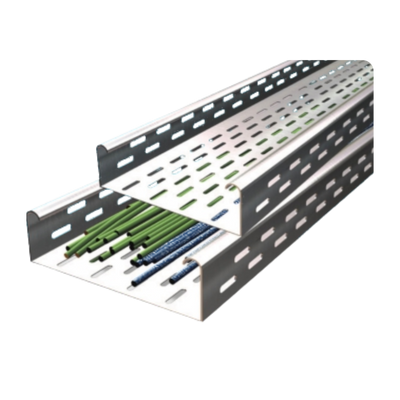
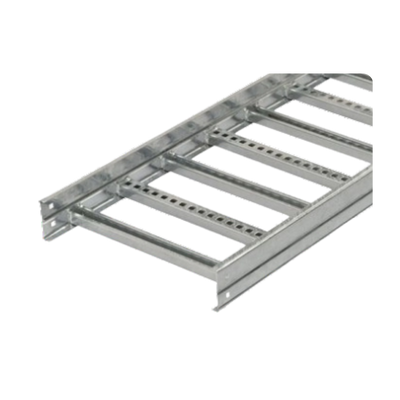
Products such as perforated cable trays, ladder cable trays, and wire mesh cable trays may be available with different material and finish options depending on the manufacturer’s capabilities and project requirements.
How to Choose a Corrosion Resistant Cable Tray in Mumbai
Before finalizing a cable tray, ask the following questions:
- Where will the cable tray be installed?
- Will it be exposed to rain or moisture?
- Is the location near a coastal or marine environment?
- Are chemicals or industrial pollutants present?
- What service life is expected?
- What coating process and specification are required?
- Will the tray be exposed to mechanical damage during installation?
- What maintenance access will be available?
These questions can help engineers and contractors choose a suitable corrosion resistant cable tray in Mumbai based on actual project conditions.
GI vs Hot-Dip Galvanized Cable Tray: Which Should You Choose?
There is no universal answer that makes one option better for every application.
A suitable GI cable tray may be an effective choice for indoor and general industrial installations where the specified zinc coating provides the required protection for the environment.
A hot-dip galvanized cable tray may be a better consideration for demanding applications where robust zinc protection, environmental exposure, and long-term corrosion resistance are important design factors.
The most important step is to select the coating system based on the actual installation environment, technical requirements, and applicable standards.
For projects in Mumbai, the local climate and industrial environment should be considered together with the location-specific exposure conditions. A reliable cable tray manufacturer serving Mumbai can help project teams evaluate suitable materials, finishes, dimensions, and product configurations.
Frequently Asked Questions
What is the difference between a GI cable tray and a hot-dip galvanized cable tray?
GI is a general term used for galvanized steel products, while hot-dip galvanizing is a specific process in which steel is immersed in molten zinc. The actual protection level depends on the coating process, specification, coating characteristics, and installation environment.
Is a GI cable tray suitable for Mumbai’s humid climate?
A GI cable tray can be suitable for certain indoor and general industrial applications in Mumbai when the coating specification matches the expected environmental exposure. Outdoor or more aggressive environments may require a different or more robust corrosion protection system.
Is hot-dip galvanized cable tray better for outdoor industrial projects?
Hot-dip galvanized cable trays may be considered for outdoor industrial projects because the process provides a robust zinc coating with barrier and sacrificial protection. The final choice should be based on the specific environmental conditions and project requirements.
What makes a cable tray corrosion resistant?
Corrosion resistance depends on factors such as the base material, zinc coating, coating thickness, galvanizing process, environmental exposure, installation quality, and maintenance. The product should be selected according to the actual conditions of the project.
How do I choose a hot-dip galvanized cable tray in Mumbai?
Evaluate the installation environment, moisture exposure, expected service life, cable load, tray dimensions, coating specification, and project standards. A qualified cable tray manufacturer can help identify suitable options.
Are galvanized cable trays suitable for coastal and humid environments?
Galvanized cable trays may be suitable for some coastal and humid environments, but the required corrosion protection depends on the level of exposure. More aggressive environments may require a higher level of protection and a specific coating specification.
Get the Right Corrosion-Resistant Cable Tray for Your Project
Planning an industrial, commercial, infrastructure, or electrical project in Mumbai? Efra Industries offers cable management solutions for a range of industrial applications, including cable trays and related components.
Share your project location, installation environment, cable requirements, dimensions, and preferred finish with our team. We can help you evaluate suitable GI and hot-dip galvanized cable tray options based on your project requirements.
Contact Efra Industries today to discuss your cable management requirements and request a quotation.
Request a quotation for your cable tray project or contact our team to discuss corrosion-resistant cable tray solutions for Mumbai industrial applications.